What The Element That Touches Home Taught Me
Nov 17, 2026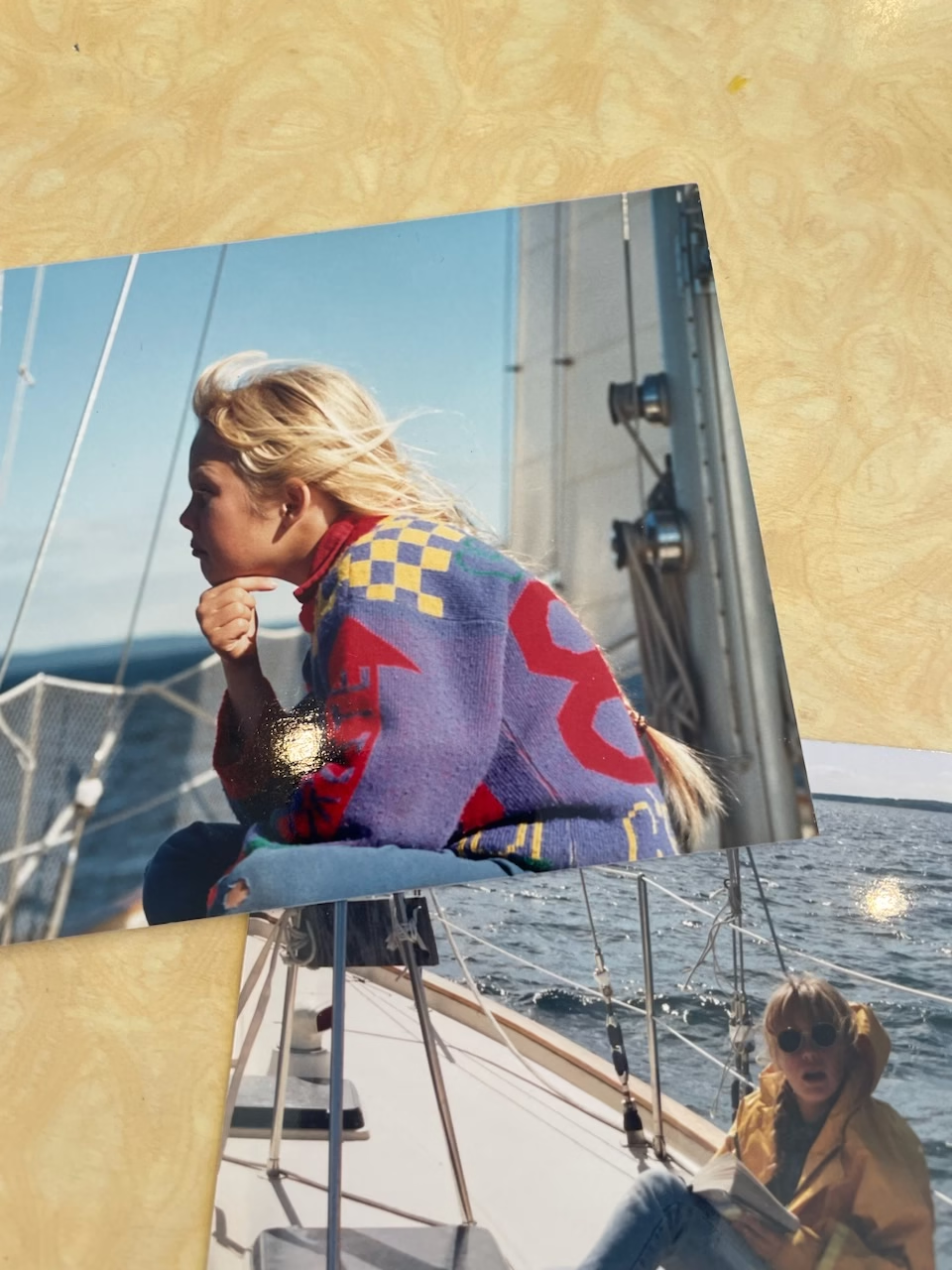
On Set: What The Element That Touches Home Taught Me
I’ve been a writer for two decades, and in all that time I’d worked on exactly two collaborative projects. Writing is mostly a solitary art. You sit with the page, you sit with your memories, and you hope that someday someone will witness what you’ve made.
Then came The Element That Touches Home. Two days of production taught me more than I expected. First, and most importantly, I love collaborating with other artists. Second, I have so much more to learn about film as a form and an art.
I arrived knowing nothing about cameras, lighting, or sound. I didn’t understand how much of a story a single filmed image can carry: how a shot of mist, or a coil of rope, or a girl’s face can do work that would take me paragraphs. There was so much to absorb, and I wanted to absorb all of it.
In Front of the Camera
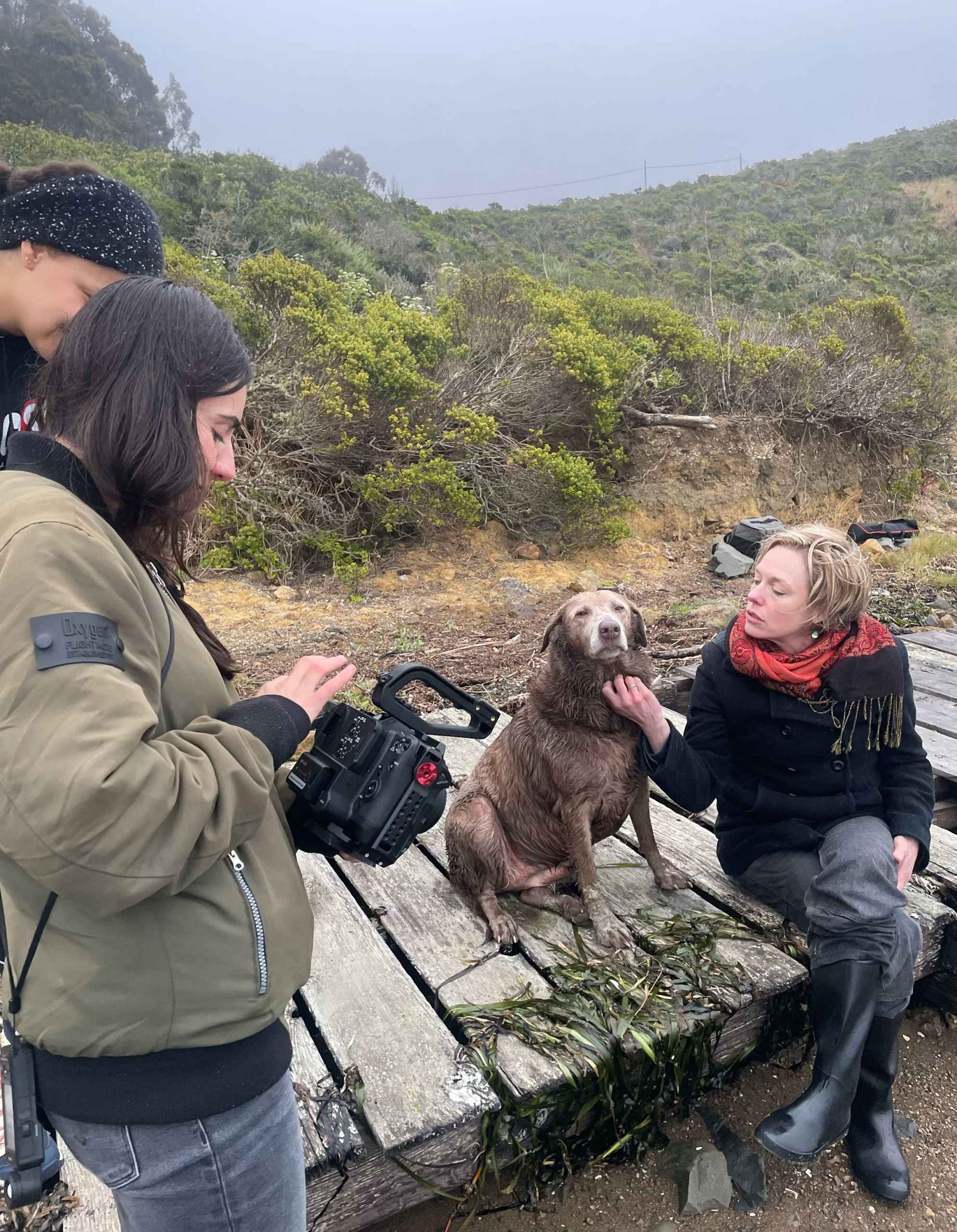
I wore several hats on this film, and only some of them were familiar. On our first day of shooting, I was an actor. My adult character narrates much of the piece, and we filmed those scenes on a cold, foggy beach.
Tromping across the sand in the mist, with a dog at my side and piles of seaweed at my feet, I found myself pulled back into memories of my real time on the peninsula. Acting your own life is a strange thing. The past isn’t something you recall; it’s something you walk back into.
Behind It, and Under the Table
On the second day, I directed for the first time.
It was surprising to find myself in that role, and even more surprising to find myself back on a sailboat, at one point folded under the table to stay out of the shot, watching a talented and luminous young actress, Aria, give voice to my early life.
Aria came prepared with questions. She wanted to know how I grew up, what my life was actually like, and how to understand the writing and her character. Answering her was its own kind of revelation. I found great lightness in being able to describe the emotions we needed her to show, rather than having to feel them all over again myself.
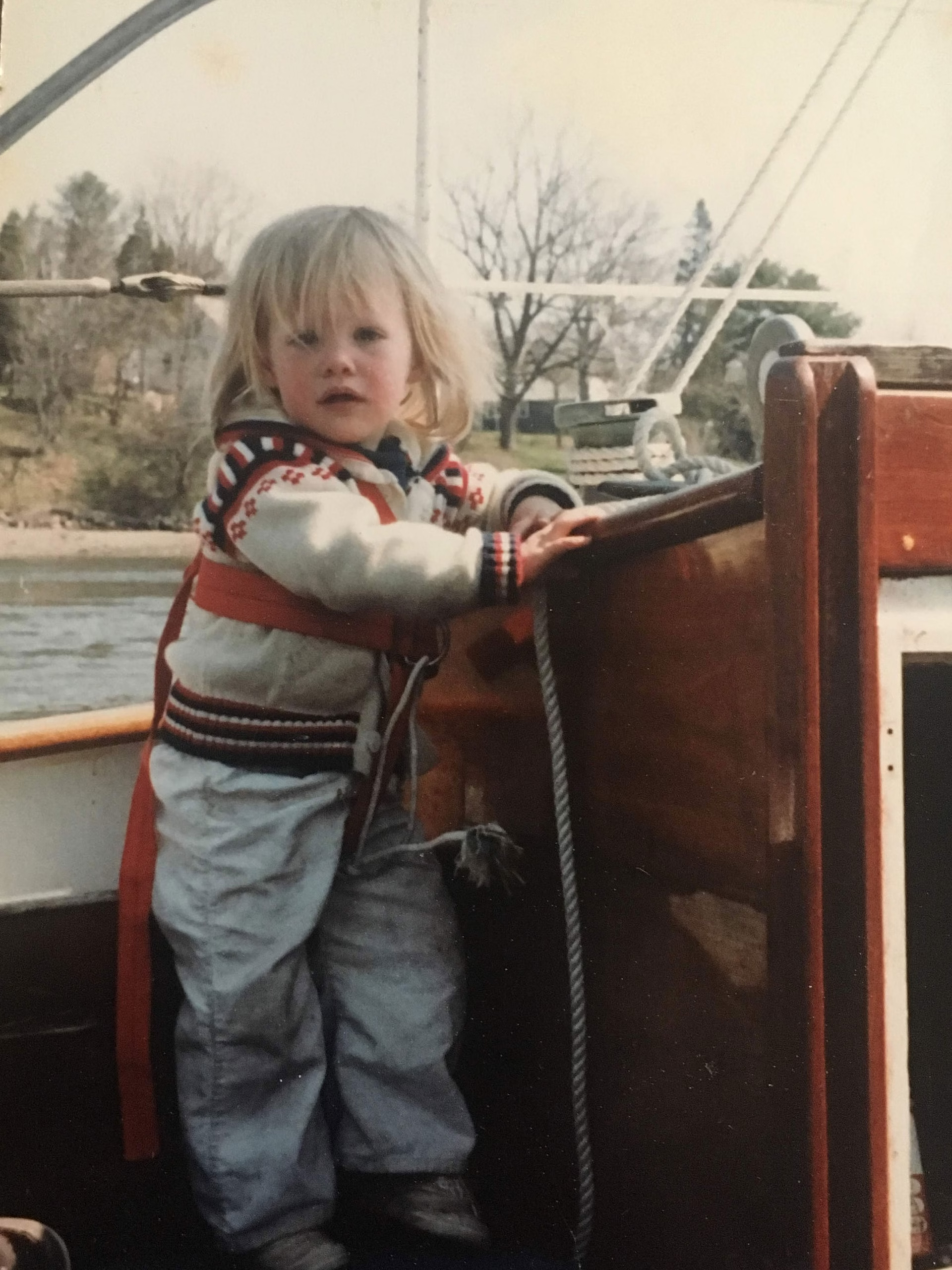
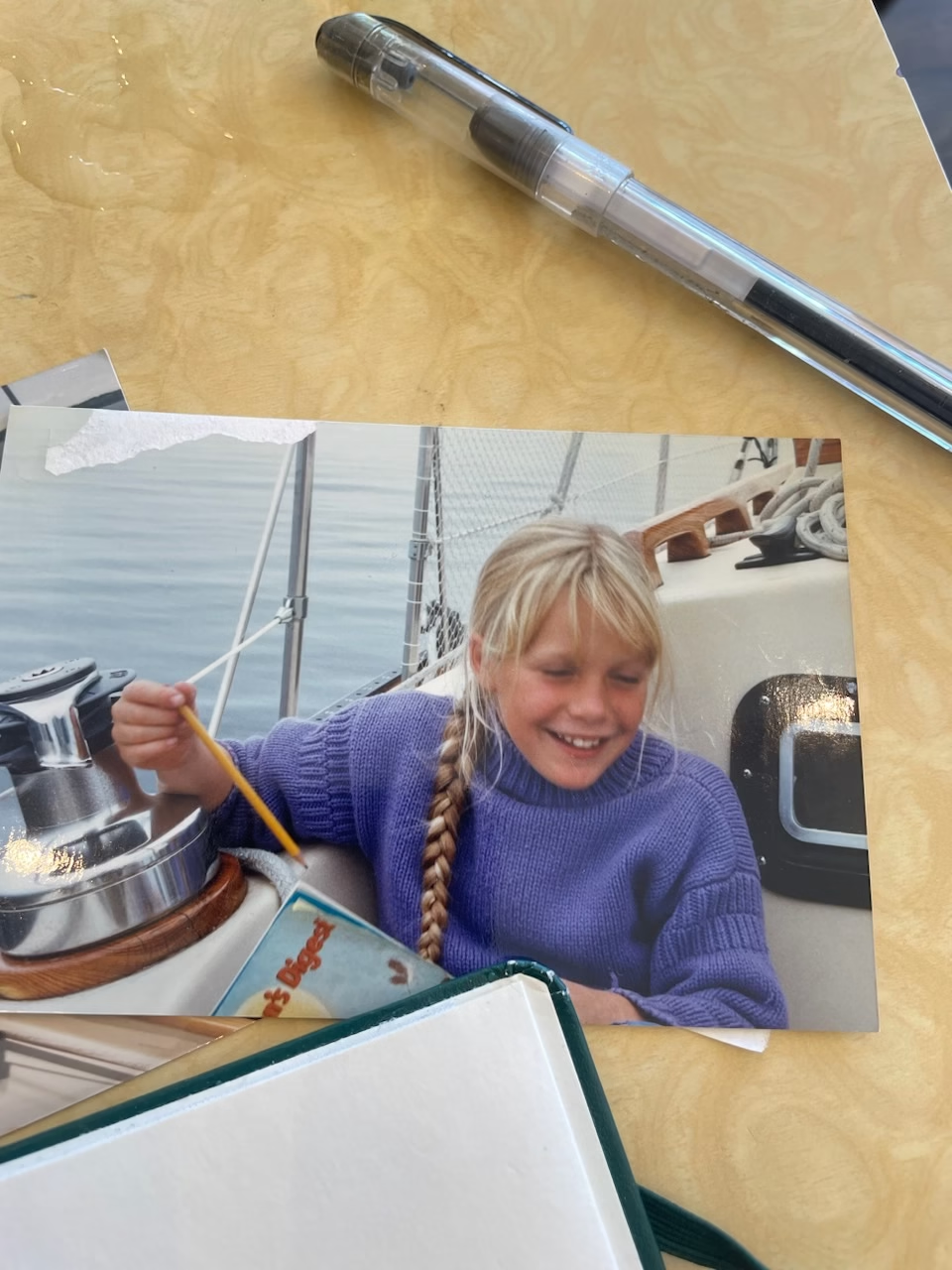
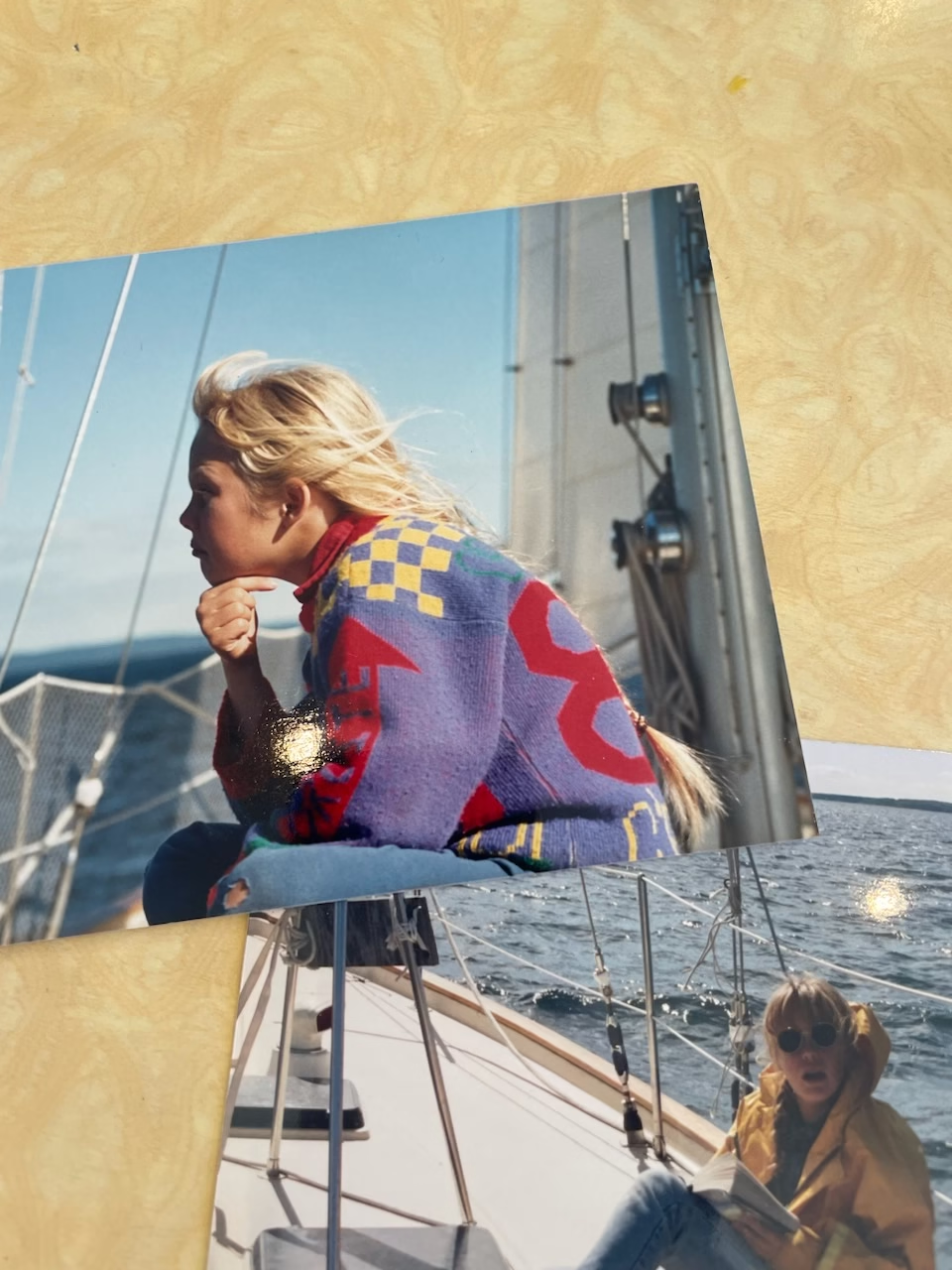
More than once, I became aware of something quietly enormous: I suddenly had the witnesses I’d craved as a girl. The child who spent so much of her life on a boat, far from shore and from people who might see her, now had an entire crew paying close attention to her story.
Teaching the Language of Boats
Directing also meant translating. I was introducing the film crew and Aria to the world of boats and all their many pieces. At one point, I believe I gave everyone a lesson in how to coil a line.
What moved me most was watching my colleagues and the actors form their own ideas, relationships, and experiences with objects I’d known intimately since childhood. They weren’t just recreating my memories. They were reinterpreting the events of the script, bringing something of their own to the cleats and lines and cabin table. Those objects had been mine for so long, and now they belonged to a story we were telling together.
I left those two days with a new motivation to collaborate more, to learn the craft of film, and to keep finding ways for my stories to be seen and reshaped by other artists. After twenty years of writing alone, it turns out the most surprising lesson was how much I’d been missing company.